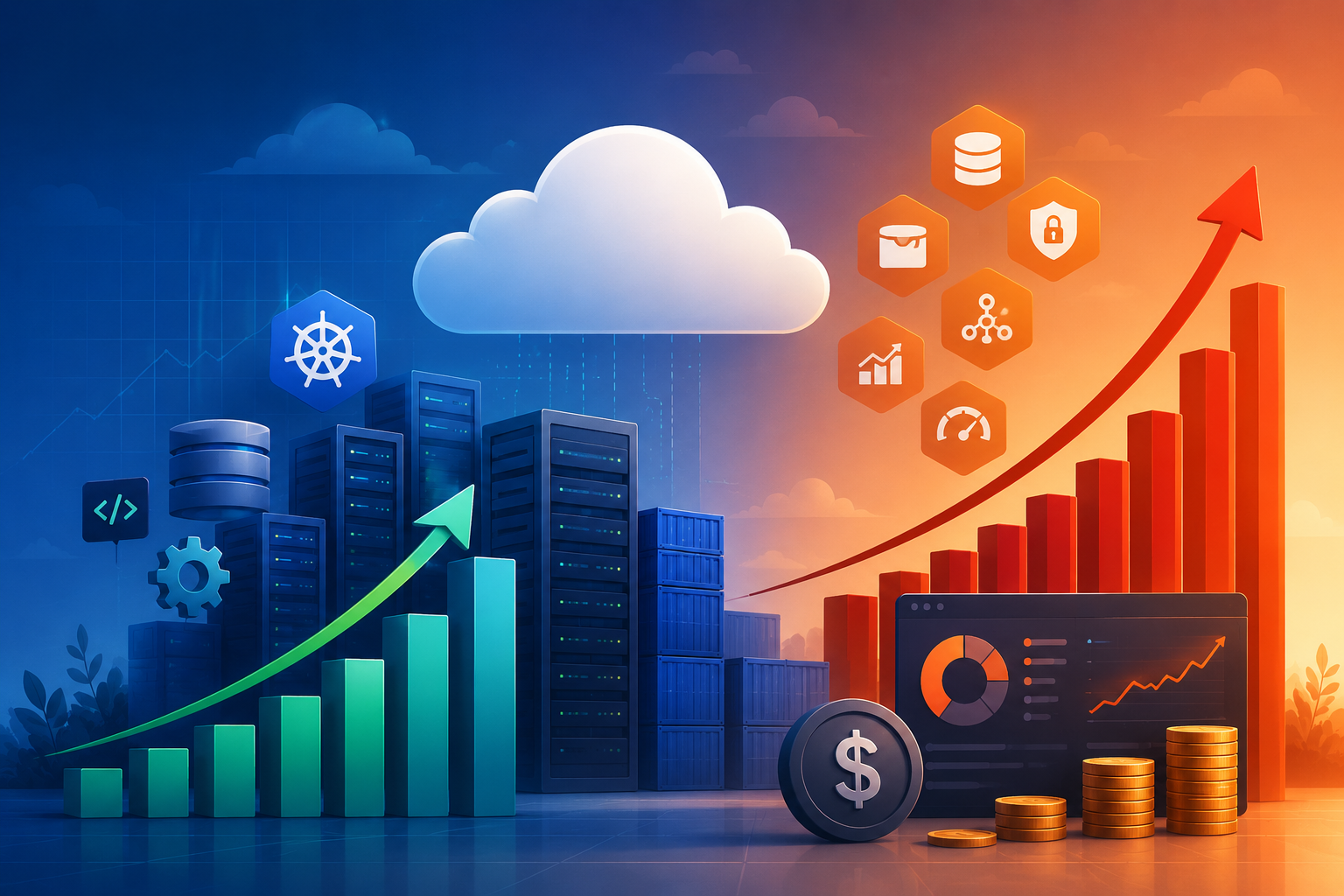

Cloud Infrastructure Scaling: Cloud costs have engineering leaders worried because infrastructure spending is growing faster than revenue. Though the platforms make it easier to deploy apps and boost services, the financial cost of expanding is higher than expected. So while the technology is amazing, it’s causing some surprising money problems.
The core issue is Cloud Infrastructure Scaling. When companies expand and connect with more users, they boost computing power using extra stuff like bigger databases, extra storage, and improved security. These tools help maintain smooth operations but come with higher costs. Because of this, many organizations are looking at how their expanding infrastructures impact profits and long-term stability.
How Cloud Infrastructure Scaling Drives Higher Costs
Cloud services are great for flexibility and speed when starting out. You don’t need to buy physical hardware to launch apps, and it’s easy to expand. This makes it perfect for quick growth. But, as you advance, things get complicated and costly. Simple setups move to needing multiple databases, fancy storage, and network services. While all this improves performance and availability, the bill each month gets much higher.
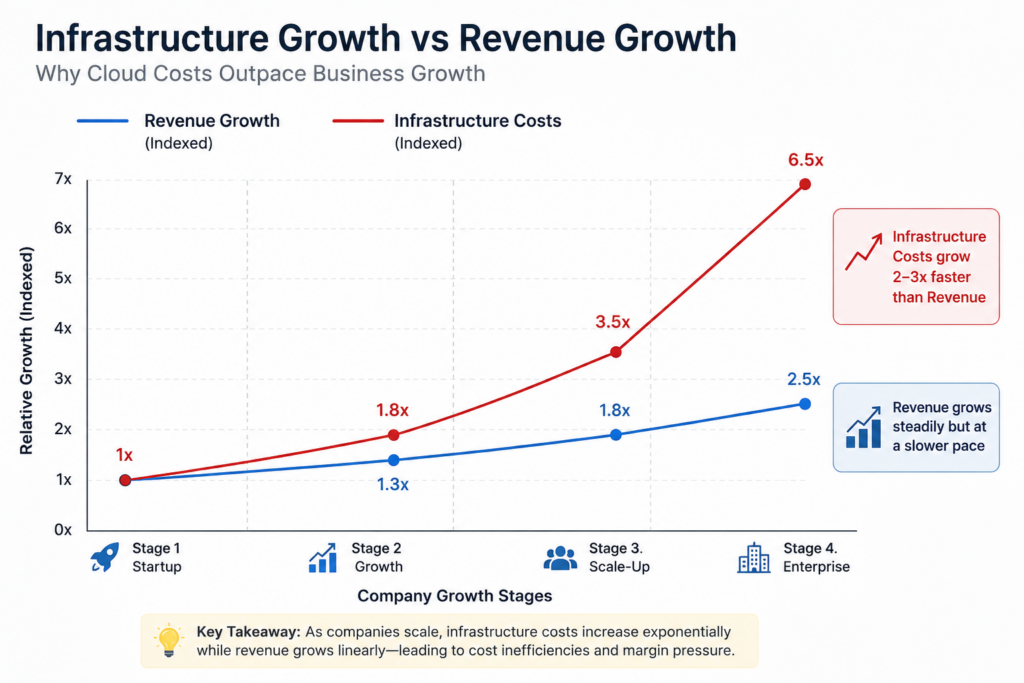
To avoid slowdowns, many companies think they’ll just keep extra resources around. The problem is that during slower periods, a bunch of that gear goes unused, still costing good money for nothing. So, while clouds offer big benefits, managing costs as you grow remains tricky.
Kubernetes and Modern Architectures Increase Complexity
Kubernetes is really popular for scaling cloud infrastructure because it makes deploying and managing containerized apps easier. This improves performance, but it can get pricey if you don’t manage it well. Often, folks set aside excess computing resources that go unused. On top of that, clusters run around the clock, no matter the demand.
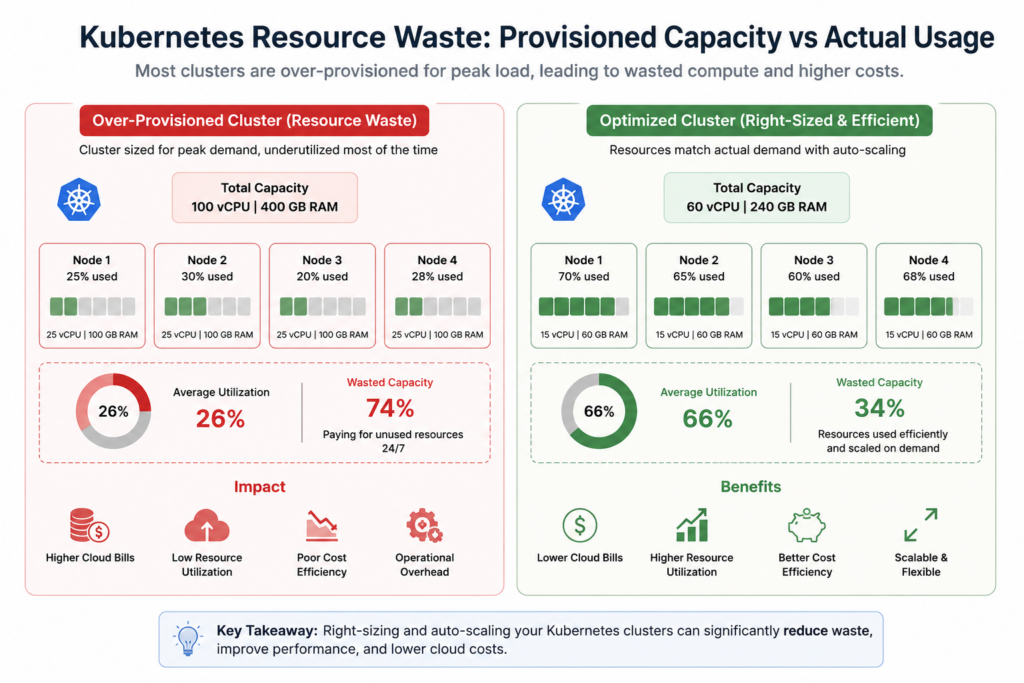
This gets especially pricey in microservices architectures. Rather than one application, companies might have several dozen or even hundreds of little services. All of these need their own bits for compute power, networking, and also for monitoring, logging, and maintenance tasks.
It’s kind of like expanding a road system. While adding lanes eases traffic, there’s then more road to look after. Same goes for the cloud; each added service boosts flexibility but piles on management chores and expenses too.
Platform Engineering and FinOps Gain Adoption
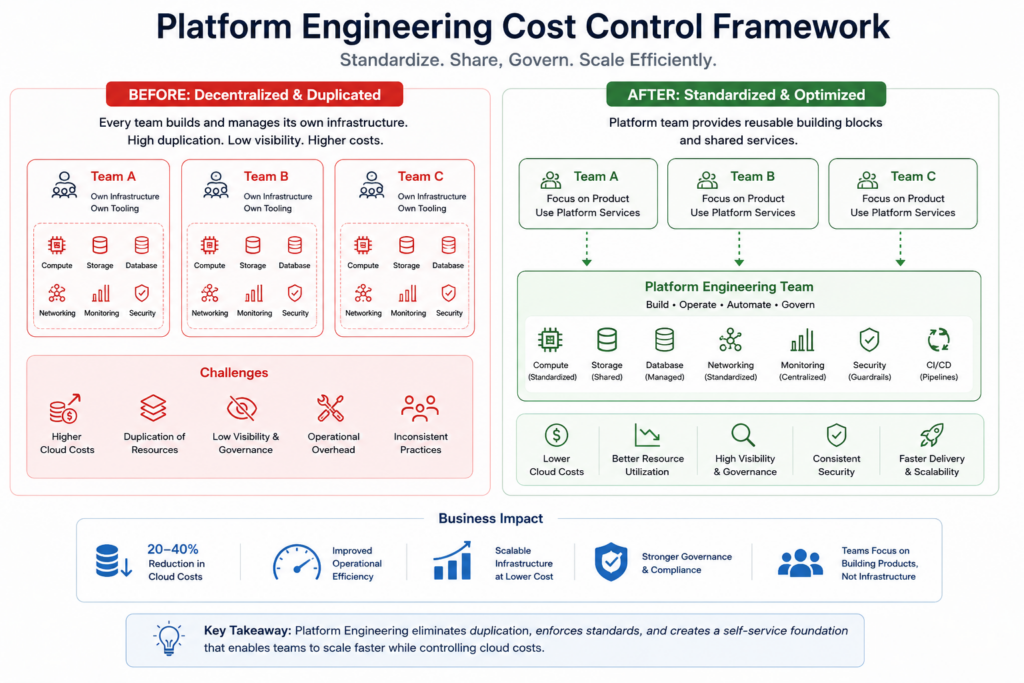
Organizations fight soaring cloud costs through platform engineering. Platform teams build standardized infrastructure for others to reuse, cutting down on duplicates and boosting consistency. This means that instead of letting everyone make their own tech stacks, platform engineers establish universal deployment rules, manage resources, and enforce policies. As a result, cloud infrastructure can scale without extra spending getting out of control.
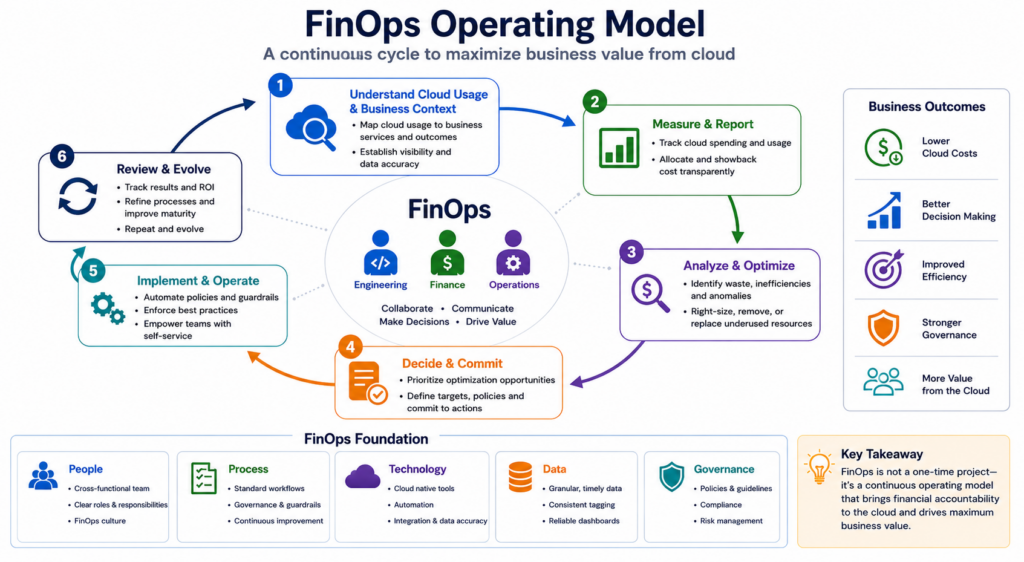
Companies also rely on FinOps for clearer insights into their cloud expenses. FinOps brings together folks from engineering, finance, and operations to monitor spending and ensure efficient resource use. Working as a team, they find waste, optimize workloads, and make sure infrastructure spending lines up with business goals.
Balancing Growth With Infrastructure Efficiency
Tech firms often sail through scaling thanks to modern cloud platforms. The real challenge, however, is preventing infrastructure costs from spiraling out of control, as they usually rise faster than revenue.
For organizations dealing with Cloud Infrastructure Scaling, the main goal is efficiency, not just raw capacity. Now, automated scaling, resource optimization, and thorough cost tracking are must-haves.
As cloud usage ramps up, engineering teams struggle with managing costs while they expand. They’re banking on these efforts allowing them to grow their business without costs derailing things in the future.
Final Thoughts
Cloud platforms make growth easier, but scaling infrastructure still involves balancing performance and cost. As workloads grow, businesses find that adding more resources doesn’t always boost efficiency. Without seeing how resources are used, spending can outpace the company’s expansion.
For engineering leaders, Cloud Infrastructure Scaling is both a tech goal and an operational and financial challenge. Companies doing platform engineering, tracking costs, and automating resource management are better at supporting growth while keeping expenses in check. With cloud environments getting more complex, the focus is shifting towards efficient scaling, not just expanding systems.