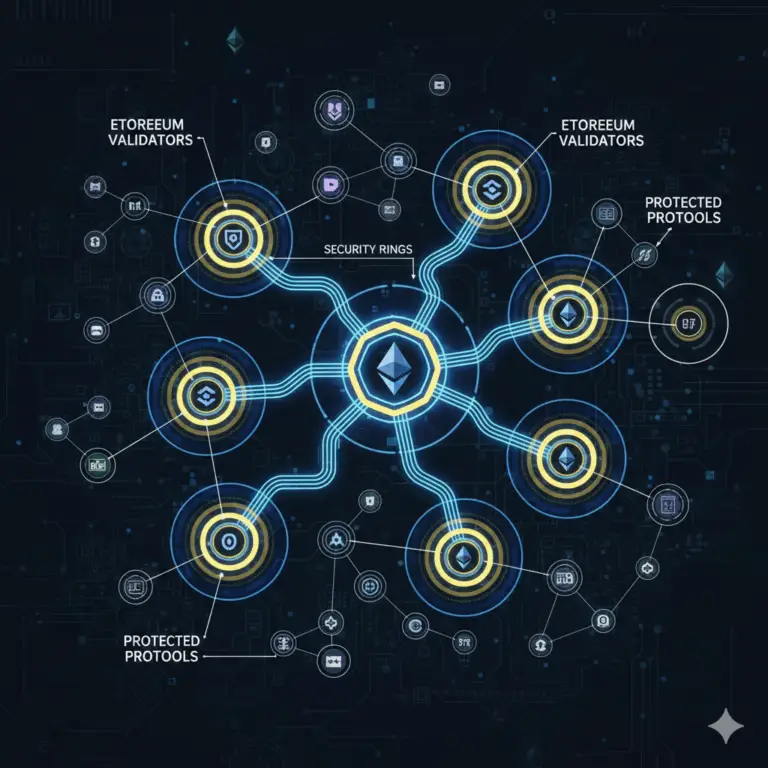


DAO governance often gets framed as a voting process. Token holders submit proposals, cast votes, and determine outcomes. Yet the larger challenge lies elsewhere. As decentralized autonomous organizations continue to grow, they face the same coordination issues that affect large-scale distributed systems.
Distributed systems involve many different autonomous entities that need to make decisions without depending on any central body. The process of DAO governance functions in a similar manner. These entities might be located in different geographical locations, and they have different amounts of information. They may even be driven by conflicting interests. Voting can be considered one of the mechanisms, but it is not sufficient alone.
Why DAO Governance Extends Beyond Token Voting
Numerous governance frameworks employ token-based voting as the process is transparent and quantifiable. In such cases, tokens empower their owners to decide about the spending from the treasury, upgrading the protocol, or undertaking initiatives within the ecosystem via on-chain governance protocols.
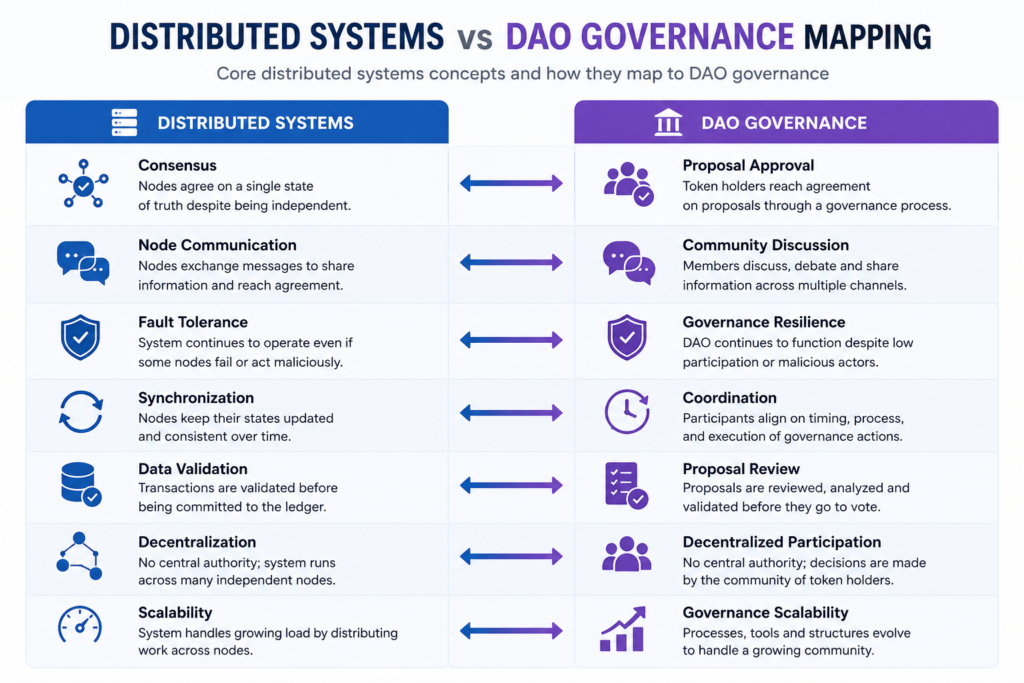
Nevertheless, while votes determine the final outcome, they do not factor in how people acquire information, assess proposals, or collaborate towards their common goals. The proposal might be approved, but it does not guarantee alignment with the overarching objectives of the DAO.
This problem is comparable to a situation within a distributed database. It is possible for the nodes to reach an agreement concerning the transactions, but synchronization, validation, and communication must also take place. DAO governance will face such issues too.
Coordination Challenges in Decentralized Governance
Distributed systems engineers often focus on latency, fault tolerance, and consensus. DAO governance encounters comparable constraints. Participants are dispersed across different time zones, use various means of communication, and vary in their level of involvement.
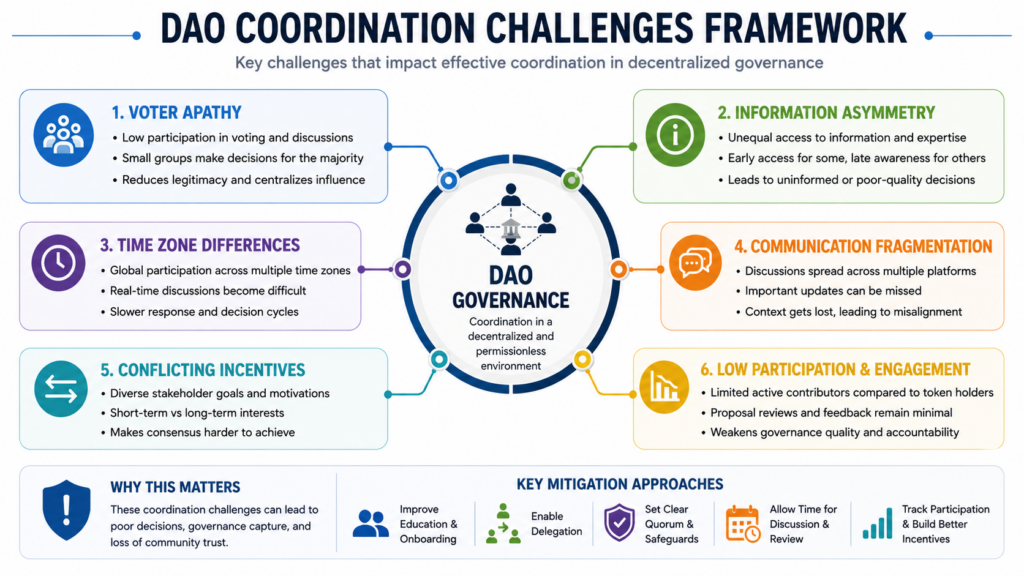
Voter participation is one of the most frequently mentioned problems in decentralized governance systems. Participants do not vote in favor of or against proposals, which means that the decision-making is made by a few people, while other participants are unaware of what is happening. This phenomenon is known as voter apathy, and it limits governance scalability.
The next problem is information asymmetry. Some participants have sufficient technical knowledge about the topic in advance, while some learn about it just before casting a vote. Thus, even though the process of voting is completely transparent, the quality of decisions can differ.
Governance Attacks and System Security
Discussions of security within blockchain governance tend to revolve around issues related to smart contracts. However, there are other threats that can be faced by blockchain governance aside from smart contract vulnerabilities. Governance attacks are focused on decision making and not necessarily the protocols used by the system itself.
An illustration of a governance attack would be vote buying. This is where participants purchase governance tokens only for the purpose of voting in favor of particular proposals.
Redundancy and verification processes are used in distributed systems for risk management. The DAO governance system also uses delegation, quorum, and voting to attain the same purpose. This will assist in ensuring that decisions made do not originate from temporary power but from the wider community.
Building Scalable Governance Frameworks
DAO expansion leads to governance structures that mimic those of larger systems architecture frameworks. Delegate voting, councils for governance, and task-focused working groups spread the tasks across different levels.
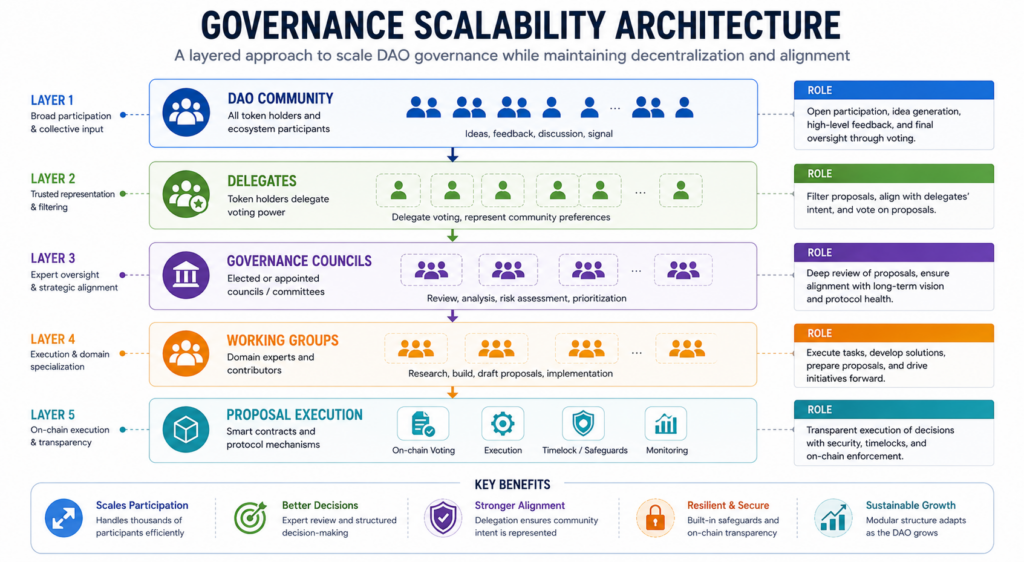
This is akin to the way modern software applications segregate different tasks to different services. Not all nodes handle all requests. Similarly, not all DAO members need to study all proposals extensively.
DAO governance continues to evolve in parallel with governance technology on blockchains. Tokenized voting is one visible feature of this system; the core challenge, however, lies in coordination and communication. For engineers and software architects, the example of DAO governance provides insight into the application of distributed system theory beyond coding.