
The Real Cost of Running a Validator in 2025
Validator rewards must be considered against hardware, engineering effort and risk, which makes solo validation more about sovereignty than pure yield.
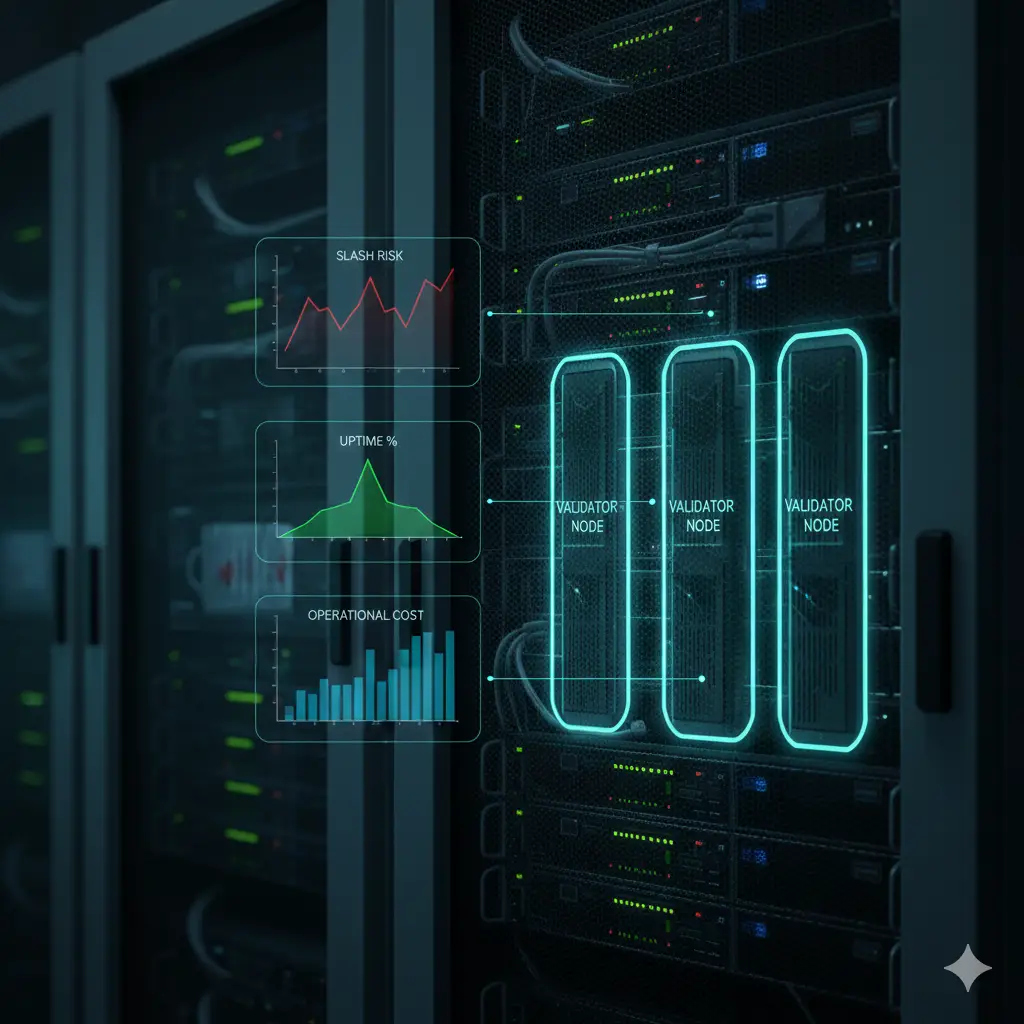
Headline yields for staking rarely tell the whole story. A serious validator operator carries hardware costs, operational workload, legal exposure and opportunity cost on top of the headline reward rate.
On the hardware side the trend is toward higher bandwidth, more storage and better monitoring rather than raw CPU. Validators that participate in extra roles such as data availability sampling or restaking services need even tighter observability.
Operationally the main expense is engineering time. Keeping keys safe, applying client updates, participating in governance and responding to incidents requires a level of discipline closer to SRE work than passive investing. Many solo stakers underestimate this ongoing demand.
If you model all of these costs explicitly you often find that the margin over a high quality liquid staking wrapper is smaller than expected. The value of solo validation is then less about extra yield and more about sovereignty and learning. That is still a valid reason to do it, but it should be an informed one.