
How NFT Asset Ownership in Blockchain Games Works
Blockchain games are changing how players interact with digital items. NFT assets ownership in blockchain games enables players to own characters, weapons, skins, and collectibles as verified owners using the blockchain technology. In contrast to normal games, where developers own everything in the game through central servers, blockchain games ensure that the ownership of the […]
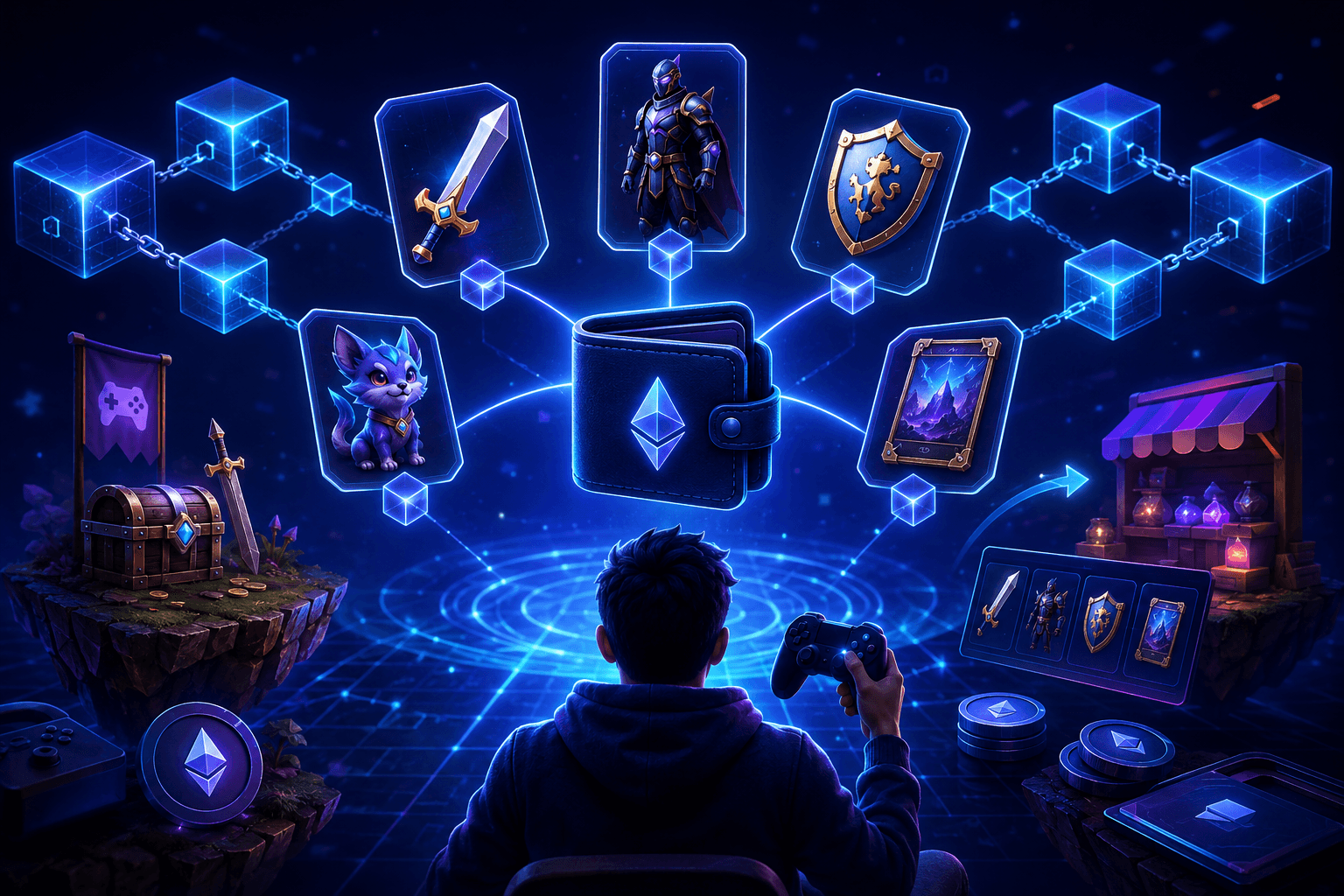
Blockchain games are changing how players interact with digital items. NFT assets ownership in blockchain games enables players to own characters, weapons, skins, and collectibles as verified owners using the blockchain technology. In contrast to normal games, where developers own everything in the game through central servers, blockchain games ensure that the ownership of the in-game assets is logged on the distributed ledger system.
This idea has become popular as more studios are looking into developing blockchain-based games. The use of NFT asset ownership in blockchain games is made possible through the implementation of smart contracts, digital wallets, and tokens that allow assets to transfer from one user to another without having to go through any centralized entity.
Why NFT Asset Ownership in Blockchain Games Differs From Traditional Gaming

Typically, the player inventory in online games is stored in servers owned by the game companies. The player is able to buy or earn some inventory within the game; however, that inventory cannot be utilized if the game stops working.
NFT assets ownership in blockchain games operates through an entirely distinct mechanism. The record of the ownership exists on the blockchain and not on a proprietary server. Every asset is attached to a wallet owned by the player. Consequently, ownership can be proved regardless of the game publisher.
A good example of this is the distinction between accessing a streaming service for a film and owning a copy of that same film. The traditional game provides the player with access to digital goods, whereas NFT asset ownership in blockchain games proves ownership using blockchain technology.
Such a system has assisted in the growth of the play-to-own gaming system whereby players can move their assets around, trade the assets through marketplaces, or keep their assets in wallets that are outside the game environment.
How NFT Asset Ownership in Blockchain Games Is Recorded
Non-Fungible Tokens (NFTs) are digital proofs of ownership. Non-Fungible Tokens are created by developers for use in games through such standards as ERC-721 and ERC-1155. The standards determine how the token behaves in the blockchain network and how ownership information is recorded.

Whenever a new NFT is created, a smart contract will generate a unique ID for the piece of art. It will note the wallet that owns the token on the blockchain. The ownership details of the token will change with every single transaction.
NFT asset ownership in blockchain games is determined by cryptic keys. Owners of wallets make use of private keys for authenticating transactions and managing their assets. Ownership can neither be changed nor transferred without these keys.
However, most non-fungible tokens of gaming items have no large data files stored on the blockchain itself. Rather, there is just a token with metadata linking back to information about the item itself.
How Smart Contracts Manage Blockchain Gaming Assets
The smart contract is a code that is written into the blockchain itself. The smart contract specifies the rules of managing the assets on the blockchain-based platform. Smart contracts define the creation, movement, upgrading, or burning of assets.
For instance, a smart contract will determine whether the owner of an asset is allowed to use it for a particular feature or game level. The smart contract may automatically process any asset transfer whenever there is a transaction on the marketplace.
The integration of NFT inventory management systems is typically done via direct connection to the blockchain network. The moment when users connect their wallets, the game looks up the information from the blockchain and shows them assets related to that wallet address.
Integration of smart contracts into NFT marketplaces is also possible. Blockchain gaming tokens can be bought, sold, or traded, keeping a record of ownership. Each transaction will become a part of the blockchain’s immutable history.

Challenges Facing NFT Asset Ownership in Blockchain Games
Though NFT ownership of assets in blockchain games offers many benefits, there are some technical hurdles associated with it. Higher transaction fees can raise the cost of use for users and network congestion may make transaction processes slower.
Security is still another issue. It is important for gamers to secure their wallets and their private keys since losing access to these credentials can lead to the loss of virtual assets. Developers should conduct an audit of smart contracts to decrease potential threats to virtual assets on the blockchain.
Many developers are considering options for solving these problems. The creation of layer-2 networks and blockchain structures other than those traditionally used helps to make transactions faster and cheaper. There is also a trend towards increased interoperability, which makes it possible to use game items in different games.
NFT assets ownership in blockchain games is always changing since developers have been testing different ways in which they can implement digital ownership. For developers who have just begun their career, it would be wise for them to learn about smart contracts, NFT inventory, and blockchain gaming assets.
Final Thoughts
Blockchain-based games and non-fungible token (NFT) asset ownership take a different path when it comes to digital asset management. Digital asset ownership does not depend only on central servers of the game itself, but players can own verifiable ownership certificates using blockchain and digital wallets. This is how smart contracts come into play.
As the development of blockchain technology progresses, developers are looking into different methods for improving scalability, lowering costs of transactions, and increasing interoperability among gaming platforms. For young developers, learning about the ownership of NFT assets in blockchain games will give them insights into such concepts as smart contracts, tokens, wallets, and blockchain technology itself, which is used extensively in Web3 gaming projects.