
How to Analyze a Web3 Project Before You Trust It
Learn how to analyze a Web3 project before investing. Avoid rug pulls with practical steps every beginner and self-taught Web3 learner must know.
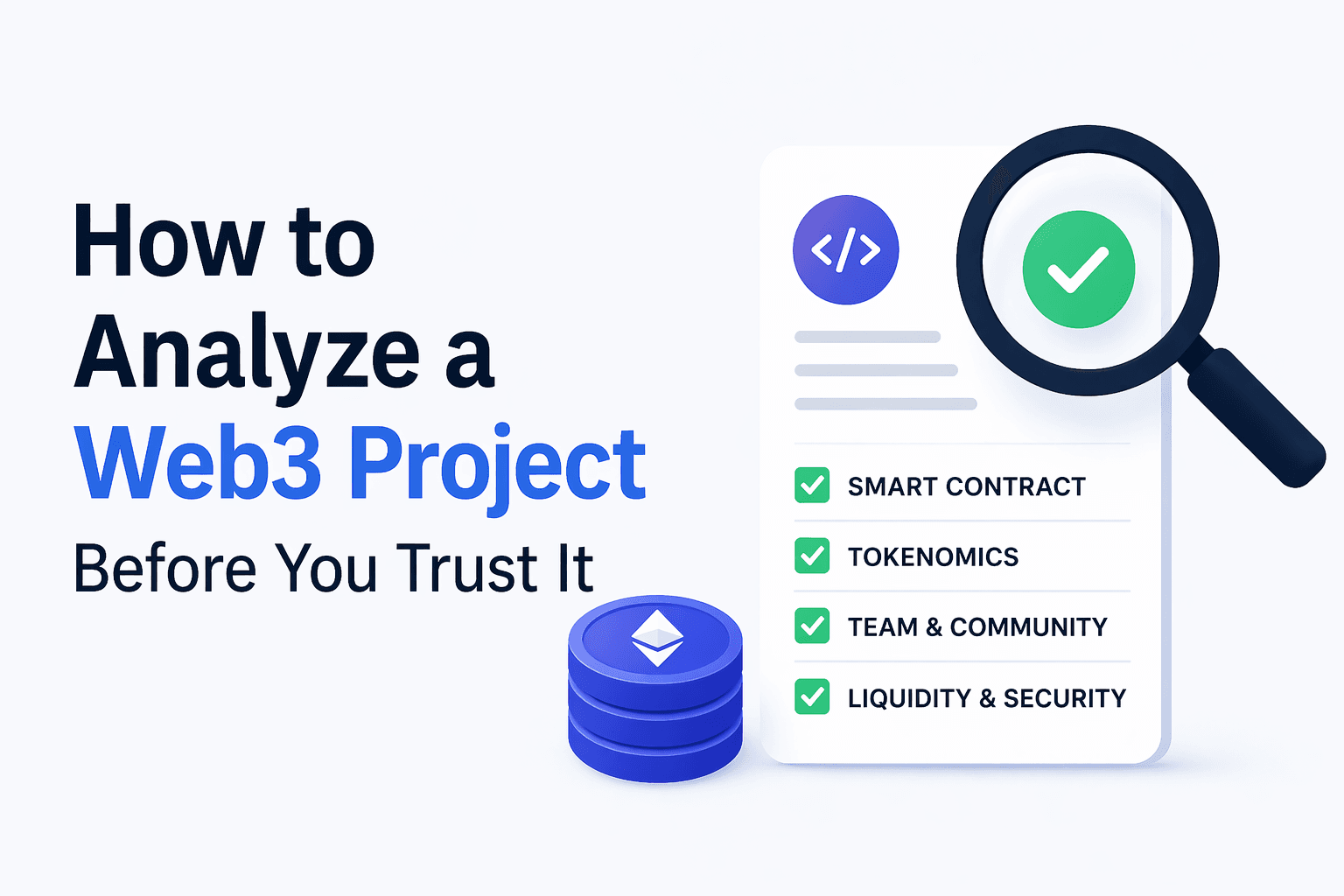
Market data and developer discussions show that many new Web3 users don’t know how to analyze a Web3 project, they rely on price trends and social media signals when choosing projects. Analyses of blockchain on X usually involve spotting recurring trends where people buy into a project without looking at token smart contracts, liquidity arrangements, and token ownership. This behavior exposes participants to avoidable risks.

On-chain records show that many failed or short-lived tokens share similar traits. These include concentrated token supply, limited contract transparency, and weak development activity. Public threads from developers have documented cases where these signals appeared early but were ignored. These observations have led to a structured method for evaluating Web3 projects using verifiable data.
Surface-Level Signals Replace Technical Evaluation
The evaluation of the projects is done by users not based on the architecture behind the project but by visibility metrics. These include followers, trending hashtags, and price performance. However, these indicators do not reflect how a protocol functions at the contract level.
Blockchain data shows that projects with unclear token allocation often route large portions of supply to a few wallets. This structure facilitates coordinated dumping. Additionally, unsigned contracts make auditing features like minting, pausing, and blacklists control impossible. Developers working on platform have reported cases where the hidden function was able to alter the token supply post-deployment.
Liquidity settings are another concern. Liquidity provided by tokens traded on decentralized exchanges does not always have any lock-in period for its funds. Without locking the liquidity time period, providers will be able to withdraw their funds.
Apply a Structured Web3 Project Analysis Framework
A structured approach focuses on verifiable components: contract logic, tokenomics, and development activity. Each element can be checked using public tools and blockchain data.
The first layer involves contract verification. Verified contracts on explorers such as Etherscan expose source code. In this way, it becomes possible to analyze various methods like transfer, approve, and custom modifiers. Usually, developers consider whether there is any privileged role such as the owner’s right for mint or adjustable transaction fee.
The second layer involves token distribution. On-chain analytics tools display wallet concentration and transfer history. Users can identify whether a small group controls supply or if tokens distribute across many addresses. Any vesting schedules, if there are any, may also be monitored using smart contract events.

In the third tier, development signals should be analyzed. Projects that make many commits in active repositories clearly show that their developers continue working on the project. Contributions to an open source project and its issues help understand the process of maintaining and developing systems by teams.
Step-by-Step Technical Evaluation Process
Contract analysis is the first step in evaluating. The user inspects the token contract via the blockchain explorer to determine whether it is verified. If verified, the user checks the code to see if there are any functions that allow minting, burning, or tax fee setting.

Next, users analyze token distribution through holder data. Explorer dashboards list top wallet addresses and their percentage holdings. A high concentration in a few wallets increases exposure to coordinated market actions. Transaction history also reveals whether tokens move between related wallets, which may indicate internal control.
Liquidity verification follows. Decentralized exchange data shows whether liquidity tokens are locked in time-based contracts. Lock durations can be checked through platforms that track liquidity pools. Short lock durations permit premature withdrawals, whereas long lock periods prevent withdrawals.
Security assessment involves examining whether there are any audit reports or third-party verification. In instances where there are no audits, the developer compares the contract code with previously available templates. Similarity detection tools identify reusing practices. Although reusing is common practice, a template that remains untouched will contain functions unrelated to the intended use.
Lastly, the user evaluates signals from development and community perspectives. The number of commits, contributions, and repository actions offer quantitative data points. Social platforms like X or Discord indicate whether the developers engage in answering technical queries or merely hype up price action.
Applying Technical Checks to Reduce Exposure
This combination helps users transition from speculating to analyzing their findings systematically. All components such as contract code, token distribution, and liquidity can be validated based on publicly available information. Developers’ community on X constantly promotes the use of such approaches, often giving live examples of how these signals emerge in blockchain.
Final Thoughts
With the growing number of Web3 projects and available transparency, more in-depth assessment becomes possible. Technical assessment of projects always brings some signals that cannot be seen by just looking at the surface.