
Can DeFi in Emerging Markets Replace Traditional Banks?
Can DeFi replace traditional banks in emerging markets? Explore DeFi adoption, financial inclusion, stablecoins, and banking alternatives
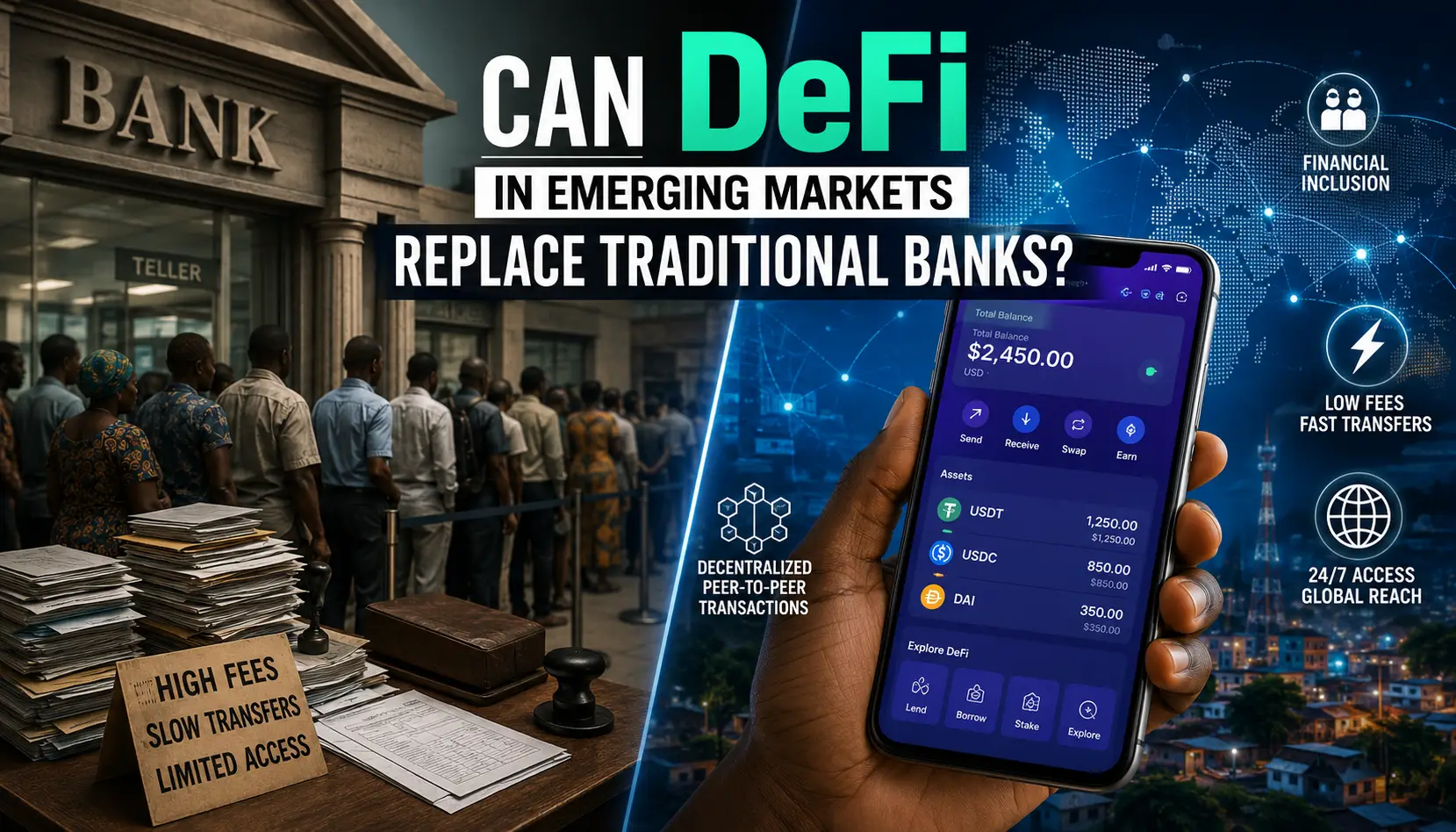
Emerging nations’ banks and banking systems continue to be plagued by issues such as inflation, low financial inclusion rates, and high transaction costs. Hence, DeFi in emerging markets has received some interest from individuals in search of new payment methods, saving opportunities, borrowing capabilities, and cross-border transactions. This trend has been noted by blockchain firms as well as industry experts due to increased stablecoin usage and cryptocurrency adoption via mobile phones.
The discussion around DeFi in emerging markets has expanded as fintech firms, crypto startups, and blockchain developers introduce services aimed at unbanked populations. Although conventional banking institutions continue to dominate financial systems, decentralized finance platforms currently facilitate lending services, peer-to-peer transactions, and cryptocurrency exchange activities without the need for any intermediary authority
How DeFi in Emerging Markets Is Expanding Financial Access
DeFi is carried out by smart contracts that run on the blockchain and automate financial transactions. It allows people to access different services without having bank accounts but using their digital wallets. The mobile internet development in several emerging economies has facilitated access to such technologies.

Blockchain platforms like Ethereum, Solana, and BNB chain offer decentralized applications, which include lending, borrowing, and token exchange options. To use them, people must connect using wallets like MetaMask or Trust Wallet, and then liquidity pools fund transactions. Transactions occur automatically once the required network conditions appear.
Financial inclusion is another topic that has gained attention regarding DeFi technology. Stablecoins connected to fiat money enable people to minimize the risks associated with fluctuations in their local currencies. Thus, people who live in countries that are experiencing inflationary pressures tend to use dollar-backed stablecoins.
Finally, cross-border transactions is another field in which the adoption of decentralized finance has grown. Conventional systems imply the participation of many intermediaries and high commissions. On the contrary, DeFi platforms enable direct transactions between two participants of the transfer process through blockchain platforms.
Why Traditional Banking Struggles in Emerging Economies
The coverage of banking facilities is uneven in many developing economies. Based on data from the financial sector, there are still millions of people who do not have access to banking services because of documentation, geographical constraints, and the cost of maintaining accounts. Rural areas are known to experience slower transactions and lesser availability of financial instruments.

Moreover, there is a distinction in terms of the digital infrastructure that is used by banks. Where some financial institutions depend on outdated software and clearinghouses, this process might take more time due to high transaction volumes. On the other hand, decentralized finance platforms work perfectly because of their blockchain nodes.
Also, capital controls, foreign currency controls, and others are factors that led to the adoption of cryptocurrencies in banking operations. People who want to access their digital currencies or wish to pay overseas will utilize decentralized exchanges. Crypto peer-to-peer trading has increased in countries where bank access is difficult or where the currency depreciates.
Nonetheless, regulatory bodies in various jurisdictions also track activities in decentralized finance networks. Some nations have adopted crypto licenses, whereas others still ban digital asset trading and storage services.
Can Stablecoins and DeFi Become Banking Alternatives?
The role of stablecoins in driving the growth of DeFi in emerging markets remains very crucial. Stablecoins offer trading pairs, lending opportunities, and payment methods through many decentralized finance platforms. Some blockchain analytics companies indicate high volumes of transactions on stablecoins in developing countries with very volatile currencies.

There are also decentralized lending systems attracting users looking for an alternative to conventional credit mechanisms. By using the collateralized lending system, users may make deposits in crypto assets in liquidity pools to borrow other digital assets.
Blockchain banking services targeting mobile users are also being developed by developers in the ecosystem. Currently, there are some decentralized apps providing easy access to wallet services and quick payment via QR code while making use of lower-fee transactions via Layer 2 scaling networks.
Meanwhile, technical issues and security threats remain major challenges for the development of these decentralized financial services. Vulnerabilities within smart contracts, liquidity problems, and network congestion are all examples of challenges that are common in the space.
Risks Preventing DeFi in Emerging Markets From Scaling
Regulatory uncertainties remain a major problem that is affecting the development of decentralized finance systems. Regulatory authorities from many countries have started thinking about how digital currencies can fit into their existing banking and securities laws. There are disagreements on compliance standards for money laundering policies and consumer protection in various regions.
Another problem that could affect the growth of Web3 financial services is scalability concerns. The transaction costs may increase during peak traffic periods on public blockchains. Developers are trying to solve this problem using layer 2 roll-ups, side-chains, and consensus mechanisms.
Education is yet another component that could influence the rate of adoption. There is still an issue with educating consumers about the risks associated with managing keys, wallets, and contracts. Firms from the blockchain industry and fintech companies have already launched campaigns to educate people about the technology and its financial applications.
Final Thoughts
Traditional banking institutions continue to rule the global economy; however, decentralized finance is now beginning to make its way into financial talks in developing nations.