
Beginner Guide to Reading On Chain Data
On chain analysis starts with explorers and then moves to custom indexers that turn raw events into tables you can actually reason about.
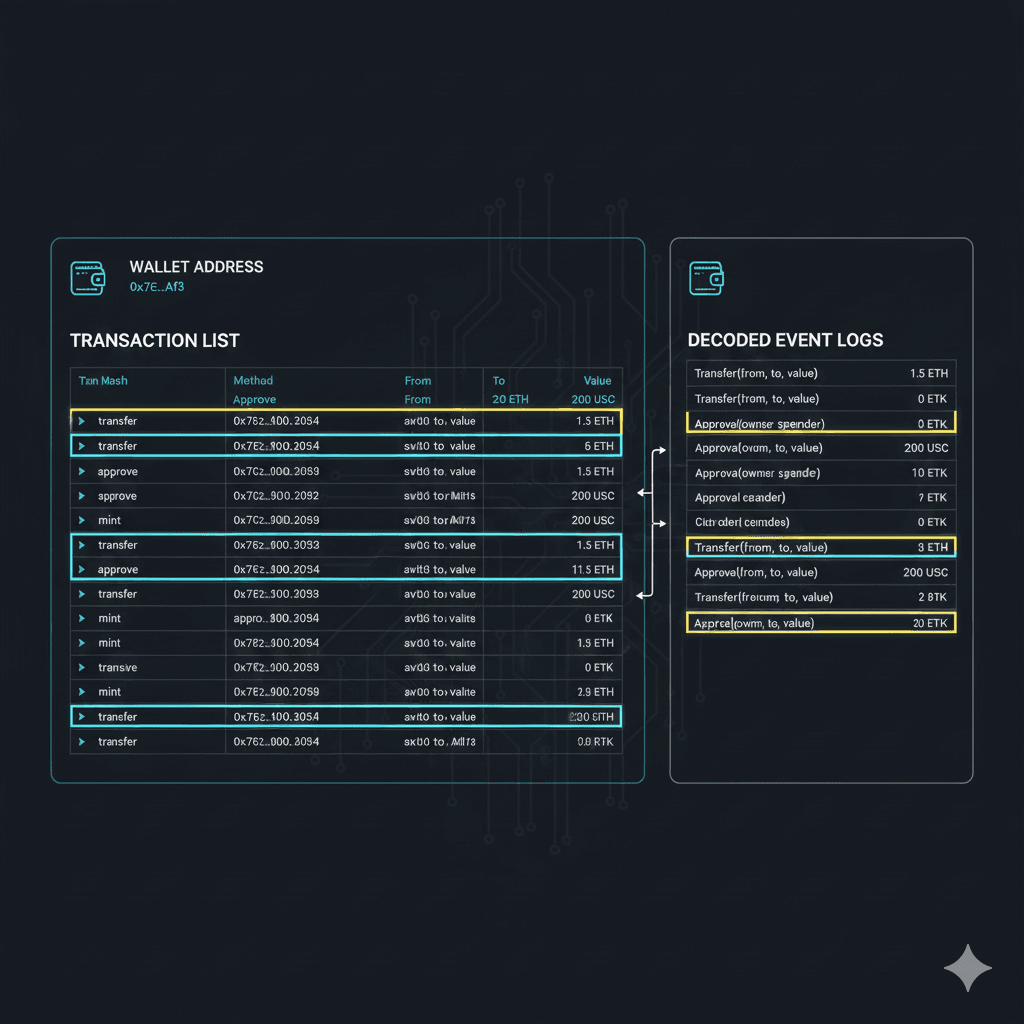
On chain data looks intimidating at first but the structure is consistent. At the base level you have blocks, each of which contains transactions. Transactions call contracts which emit events and change storage.
The easiest way to start is with a block explorer. Search for your wallet address and walk through recent transactions. For each one identify the sender, the recipient, the value transferred and the gas used. Then click into the called contract and inspect the decoded event logs.
When you are comfortable with explorers you can move to indexers. Services like The Graph, Dune or your own Postgres based pipeline can transform raw events into tables that analysts can query. For Coinslive style research you will often combine price data with protocol specific events to answer concrete questions.
The key habit is to always trace a claim back to on chain evidence. Whether you are investigating a hack, analysing token unlocks or checking treasury flows, the ledger gives you a single source of truth that does not depend on marketing decks.